AI Dog Collars, Explained: What They Do, Cost, and What's Real (2026)
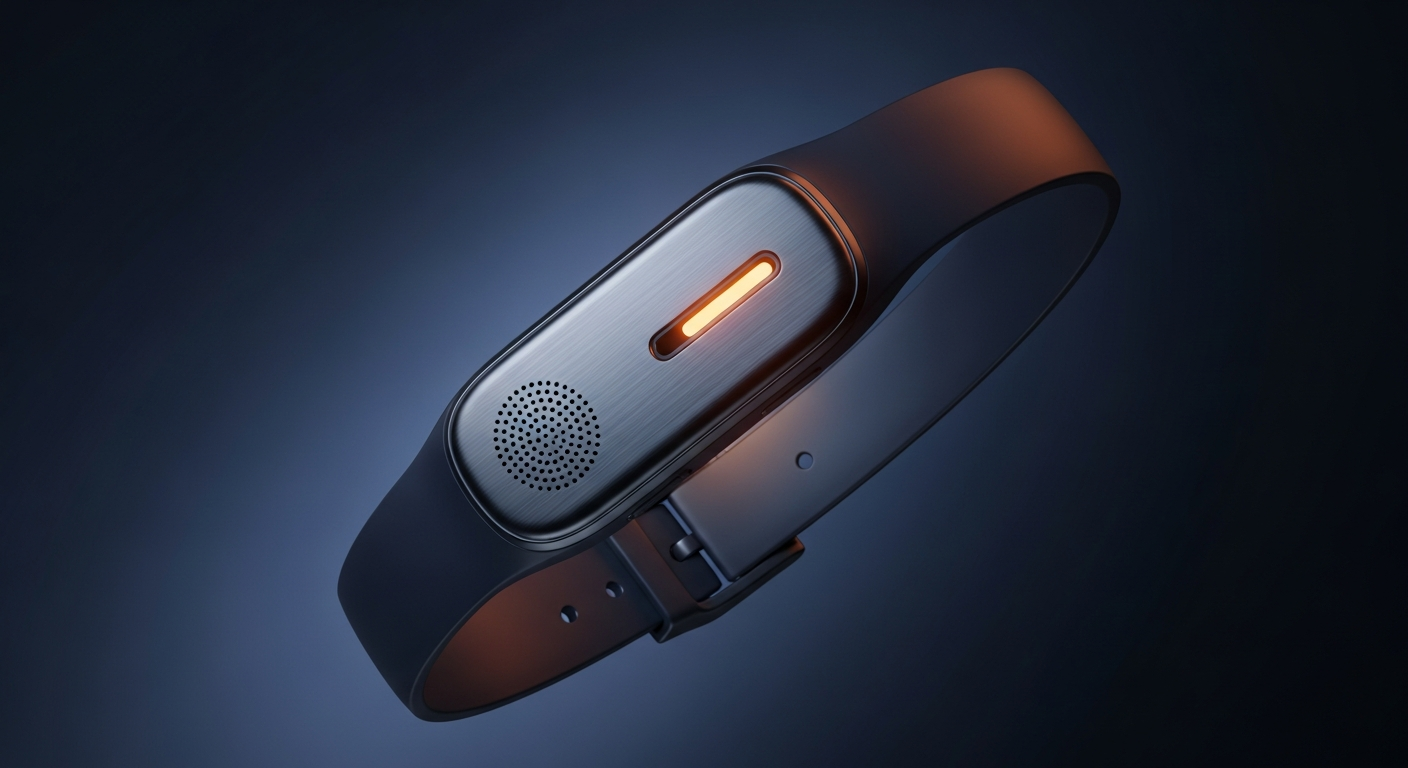
AI dog collars are real, but they're not what the movie Up promised. In 2026, the category splits into four types: talking collars that give your dog a voice personality ($199-$595), GPS and health trackers that use machine learning ($70-$599), "AI translator" gadgets whose claims lack scientific backing, and button boards. This guide covers what each type actually does, what it costs, and where the marketing outruns the technology.
Key takeaways
- Four types exist: talking/voice collars (entertainment), GPS/health smart collars (safety), "AI translator" devices (unproven claims), and button boards (training-based communication).
- No collar translates barks into English. AI can classify a bark's emotional tone with about 70% accuracy in research settings; sentence-level "translation" claims have zero peer-reviewed validation.
- Total cost matters more than sticker price. First-year costs range from about $100 (button kit) to roughly $890 (Shazam Band Ultra with year-two renewal looming). Subscriptions are where budgets quietly break.
- Match the collar to the job. GPS collars (Fi, Tractive, Halo) win on safety and lost-dog recovery. Talking collars (SPEAK, Shazam Band) win on family fun. Neither replaces the other.
- Buy from companies you trust to stick around. Whistle's August 2025 shutdown bricked every device overnight. Cloud-dependent hardware is only as good as the company behind it.
What is an AI dog collar?
An AI dog collar is a wearable device for dogs that uses artificial intelligence to do one of three jobs: give your dog a spoken voice personality, track your dog's location and health patterns, or attempt to interpret your dog's vocalizations. The "AI" part is software, usually running in the cloud, that processes what the collar's microphone, GPS chip, or motion sensors pick up.
The category is young and growing fast alongside the broader pet economy. American Pet Products Association data shows U.S. pet spending hit $158 billion in 2025 and is projected to reach $165 billion in 2026, with 53% of U.S. households now owning a dog. Pet tech is one of the fastest-moving corners of that market, which means genuinely useful products and pure hype are launching side by side. Telling them apart is the whole point of this guide.
Are AI dog collars real, or just hype?
Both, depending on the claim. The honest scorecard looks like this: AI voice generation is real and works well. AI-powered GPS tracking and activity monitoring are real and mature. AI bark classification is real but early. AI bark translation is marketing.
The best public evidence for what's possible comes from the University of Michigan, where researchers adapted Wav2Vec2, a model built for human speech, to analyze recordings from 74 dogs. The model classified bark types, such as playful versus aggressive, with about 70% accuracy and could estimate a dog's age, sex, and breed from sound alone. That's genuinely impressive science. It is also nowhere near "your dog said he wants chicken for dinner." A 70% guess at emotional tone, in a controlled study, is the current state of the art. Keep that number in mind whenever a product page promises 95% translation accuracy.
So when you ask "are AI dog collars real," the useful answer is: the collars are real, and several are worth buying. Just buy them for what they actually do.
How does an AI dog collar actually work?
Every AI collar is a sensor package plus cloud software. What differs is which sensors it uses and what the software is trained to do.
Talking collars run a four-step pipeline. A microphone on the collar picks up your voice. Speech-to-text software converts your words into text. A large language model, the same family of technology behind ChatGPT and Claude, generates a reply in the dog's configured personality. Text-to-speech converts that reply into a voice, which plays through the collar's speaker. The dog "talks back" within a second or two. Your dog isn't producing the words; the AI is improvising a character, informed by things like your dog's name, breed, and personality settings, and sometimes by motion or bark sounds the collar detects.
GPS and health collars combine a GPS/cellular chip with an accelerometer. The AI here is pattern recognition: machine learning models trained on millions of hours of dog movement data learn what scratching, licking, sleeping, and running look like as motion signatures, then flag changes. Escape alerts, sleep scores, and "your dog is scratching 40% more this week" notifications all come from this.
"Translator" devices claim to run bark audio through models that output English meaning. The pipeline is plausible in outline, and that's exactly what makes the claims slippery: the hard part isn't building the pipeline, it's proving the output means what the company says it means. More on that below.
One practical consequence of all this: nearly every AI collar needs a subscription, because the GPS data, cellular connectivity, and AI processing happen on servers the company pays for. A collar with no subscription is usually a collar with no cloud brain.
What are the four types of AI dog collars?
Talking AI voice collars (SPEAK, Shazam Band)
Talking collars are the newest and most entertaining branch of the category: they give your dog a humorous, AI-generated spoken personality your whole family can banter with. Ask your golden retriever about her day and a voice from the collar answers in character. It's honest fun, and the good brands are upfront that it's a shared family joke, not a window into the dog's mind. If you've ever wondered what your dog would say if they could talk, this is the product category built around that daydream.
Two devices define the space in 2026:
SPEAK ($199 Founder's Edition + $5/month) is the budget-friendly option, built for families. The collar gives your dog a playful voice personality you can talk with; it comes with a 90-day warranty and a free mail-back v2 upgrade pledge for Founder's Edition owners. SPEAK is explicit that it's entertainment and bonding, not translation, and it makes no health claims. At $60/year, its subscription is the cheapest in the entire smart-collar category.
Personifi AI's Shazam Band ($495-$595 at launch) is the premium play. Announced in October 2024, it offers 25 celebrity-inspired voice personalities, multiple languages, and safety alerts, with its "BrainBoost" AI service included for year one and then $195-$295/year after, depending on tier. TechRadar's hands-on coverage called it "as wild as it sounds." Those prices are as announced at launch; confirm current availability and pricing directly with the company before ordering, and see our full Shazam Band alternatives comparison for the detailed head-to-head.
The honest framing: Shazam Band packs in more features (including GPS on the top tier); SPEAK costs roughly 60% less upfront and about 70% less per year. For a family buying a fun shared experience rather than a safety device, price is usually the deciding factor.
GPS and health smart collars (Fi, Tractive, Halo)
If your first question is "what if my dog gets out," this is your category, and it's the most mature one. These collars won't chat with you, but their AI does real safety work: real-time location, escape alerts, virtual fences, and health-pattern monitoring.
- Fi Series 3+: the collar hardware is free with a membership (plus a $20 activation fee); plans run $99/6 months, $189/year, or $339/2 years as of mid-2026. Known for weeks-long battery life, sleek design, and strong escape detection.
- Tractive DOG 6: the budget pick at $69.99 for the tracker, with subscriptions from about $5/month on a two-year plan up to roughly $13/month billed monthly. Live tracking works in 175+ countries, and it added health and behavior monitoring in its latest generation.
- Halo Collar 4: the premium option at $599 plus a required plan from $9.99 to $19.99/month. Its differentiator is a GPS wireless fence: you draw boundaries in the app and the collar delivers training feedback when your dog approaches them.
One cautionary tale belongs in every 2026 buyer's guide: Whistle, one of the oldest names in pet GPS, shut down on August 31, 2025 after Tractive acquired the brand from Mars Petcare. Every Whistle device stopped working, and owners had a one-month window to claim a free Tractive replacement. The lesson: a smart collar is a service, not just a gadget. Weigh the company's staying power, not just the spec sheet.
AI "pet translator" devices and apps (PettiChat and others)
This is the corner of the category where you should keep your wallet in your pocket. In 2025-2026, a wave of devices and apps began claiming to translate barks and meows into human language. The most visible is PettiChat, a roughly $149 collar claiming around 95% accuracy in translating pet vocalizations; Forbes' coverage and Trusted Reviews' reporting describe the pitch; neither the accuracy figure nor the training methodology has been published or independently verified.
Here's why scientists are skeptical, in plain terms:
- There's no ground truth. To validate a translator, you need to know what the dog actually meant, independently of the device. Nobody has that. You can't grade a translation of a language no one can read.
- The published science is far more modest. The best peer-reviewed work, like the University of Michigan bark study, achieves about 70% accuracy at classifying bark context, not translating content. A leap from "this bark sounds playful" to "I want to go to the park" is not supported by any published research.
- Extraordinary accuracy claims arrive without evidence. A 95% claim with no published dataset, no methodology, and no independent testing is a red flag in any AI product, pet or otherwise.
Could emotion-classification features be genuinely useful someday? Plausibly. Dogs do communicate volumes through vocal tone, posture, and behavior, and AI that flags "your dog sounds distressed" could have real value once validated. But in 2026, "AI translator" is a claim to be skeptical of, and it's why honest talking-collar brands go out of their way to say they do entertainment, not translation.
Button boards (FluentPet)
Button boards aren't collars, but they compete for the same wish: "I want my dog to communicate with me." FluentPet sells recordable sound-button kits, made famous by Bunny the "talking" sheepadoodle, that run from about $40 for a tester kit to $100-$160 for starter and vocabulary kits. You record words like "outside" or "play," teach your dog to press them, and build from there.
The honest read: button boards involve real training effort over weeks and months, and the scientific jury is still out on how much dogs understand versus how well they've learned that pressing buttons produces outcomes. Researchers are actively studying it. As a patient, screen-free family project, buttons are legitimately rewarding. As instant communication, they're not; expect a long runway before your dog "says" anything.
How do AI dog collars compare in 2026?
Here's the whole category in one honest table. Prices verified July 2026 except where noted.
| Device | Hardware price | Subscription | What it actually does | Best for |
|---|---|---|---|---|
| SPEAK | $199 (Founder's Edition) | $5/month | AI voice personality your family talks with; entertainment and bonding, no translation or health claims | Families who want fun and memories at the lowest total cost |
| Shazam Band (Personifi AI) | $495-$595 (launch pricing, Oct 2024) | $195-$295/year after year one | AI voice personas, multiple languages, safety alerts, GPS on top tier | Buyers who want maximum features and don't mind premium pricing |
| Fi Series 3+ | $0 + $20 activation | $99/6 mo, $189/yr, or $339/2 yr | GPS tracking, escape alerts, sleep and activity monitoring, long battery | Escape-prone dogs; design-conscious owners |
| Tractive DOG 6 | $69.99 | ~$5-13/month | Live GPS tracking in 175+ countries, virtual fences, health alerts | Budget-conscious safety buyers; international travel |
| Halo Collar 4 | $599 | $9.99-$19.99/month | GPS wireless fence with training feedback, plus tracking | Rural or large properties needing containment without physical fences |
| PettiChat | ~$149 | Varies | Claims 95% bark/meow translation; no peer-reviewed validation | Nobody, until claims are independently verified |
| FluentPet buttons | $40-$160 | None | Recordable word buttons your dog learns to press through training | Patient trainers who enjoy a months-long project |
Three patterns worth noticing. First, nothing here does everything: no single device offers best-in-class GPS safety and a talking personality at a reasonable price. Second, subscriptions define the real cost, and the spread is enormous, from $0 (FluentPet) to nearly $300/year (Shazam Ultra tier). Third, the two proven categories (talking and GPS) solve completely different problems, which makes "which is best" the wrong question. The right question is which problem you're solving.
How much does an AI dog collar really cost?
Calculate the first-year total: hardware plus twelve months of subscription. That number tells the truth the sticker price hides.
- FluentPet Get Started Kit: $100 flat. No subscription.
- Tractive DOG 6: $69.99 + $60-156/year = $130-$226 first year. Cheapest connected option.
- SPEAK: $199 + $60/year = $259 first year. Cheapest talking option by a wide margin.
- Fi Series 3+: $20 activation + $189/year = $209 first year (hardware free with membership; multi-year plans lower it).
- Halo Collar 4: $599 + $120-240/year = $719-$839 first year.
- Shazam Band: $495-$595 with year-one service included = $495-$595 first year, then $195-$295 every year after.
Two budgeting notes. Multi-year GPS plans cut per-month costs by 25-50%, but they're commitments to companies in a market that just watched Whistle vanish, so weigh the discount against the risk. And year two is where premium subscriptions bite: by the end of year two, a Shazam Ultra owner is around $890 in, while a SPEAK owner is at $319. That gap buys a lot of dog toys.
What's marketing and what's real?
A quick translation guide for AI-collar product pages:
- "Talk with your dog" (SPEAK, Shazam Band): real, when it means an AI voice personality on the collar. The conversation is genuine fun; the dog authoring it is not.
- "Translates your dog's barks" (PettiChat and similar): unproven. No peer-reviewed validation exists for sentence-level translation. Treat accuracy percentages without published methodology as advertising copy.
- "AI health monitoring" (Fi, Tractive, Halo): real but bounded. Pattern detection in activity, scratching, and sleep is legitimate and can surface changes worth a vet visit. It is screening, not diagnosis; no collar replaces your veterinarian.
- "Knows your dog's emotions": partially real at best. Research supports coarse emotional classification from vocalizations at around 70% accuracy in controlled settings. Fine-grained, real-time mood readouts are beyond current published science.
- "No subscription needed": usually means no cellular GPS or cloud AI, so check what the device actually does offline. Bluetooth-only trackers, for instance, only work within a few hundred feet.
None of this means the category is a scam. It means the category is young, and the gap between the best products and the worst claims is unusually wide. Buy on demonstrated function, dated pricing, and company credibility.
Which AI dog collar should you buy?
Match the device to the problem you're actually solving:
- "I'm worried about losing my dog." Buy a GPS collar. Tractive if budget leads, Fi if battery life and design lead, Halo if you need fencing on acreage. This is the one category where the technology is mature and the payoff (a found dog) is priceless.
- "I want something fun for my family." Buy a talking collar, and for most families the math points to SPEAK at $199 + $5/month versus $495+ with a $195+/year renewal. A talking dog turns walks, car rides, and everyday activities with your dog into comedy material, and kids especially never get tired of it.
- "I genuinely want to communicate with my dog." Skip the translators and get a FluentPet button kit, then commit to the training. It's the only communication approach with an active research community behind it, and the process itself is quality time.
- "I want everything in one collar." It doesn't exist yet at a sane price. A realistic power setup is a GPS tracker plus a talking collar, and at SPEAK-plus-Tractive prices that combo still undercuts a single Shazam Ultra's first year.
Whatever you choose, apply the Whistle test before checkout: if this company disappeared next year, what would I be left holding?
Is an AI dog collar worth it in 2026?
For the right buyer, yes, and the right buyer knows what they're buying. GPS collars are worth it for any escape artist or off-leash adventurer; they're proven safety tools. Talking collars are worth it for families who value laughter and shared moments, judged as entertainment (compare a $259 first year against a game console, not against a leash); we break down that math in our full guide to whether a talking dog collar is worth it. Translator gadgets are not worth it until someone publishes evidence.
The dream of talking with our dogs is ancient, and 2026's honest version of it is better than nothing and less than magic: AI that keeps your dog safer, and AI that gives your dog a voice in the family's running joke. Both are real. Both are worth paying for. Just don't pay for the mind-reading, because nobody's selling the real thing yet.