50 Fun Things to Do With Your Dog: Indoors, Outdoors, and With Kids
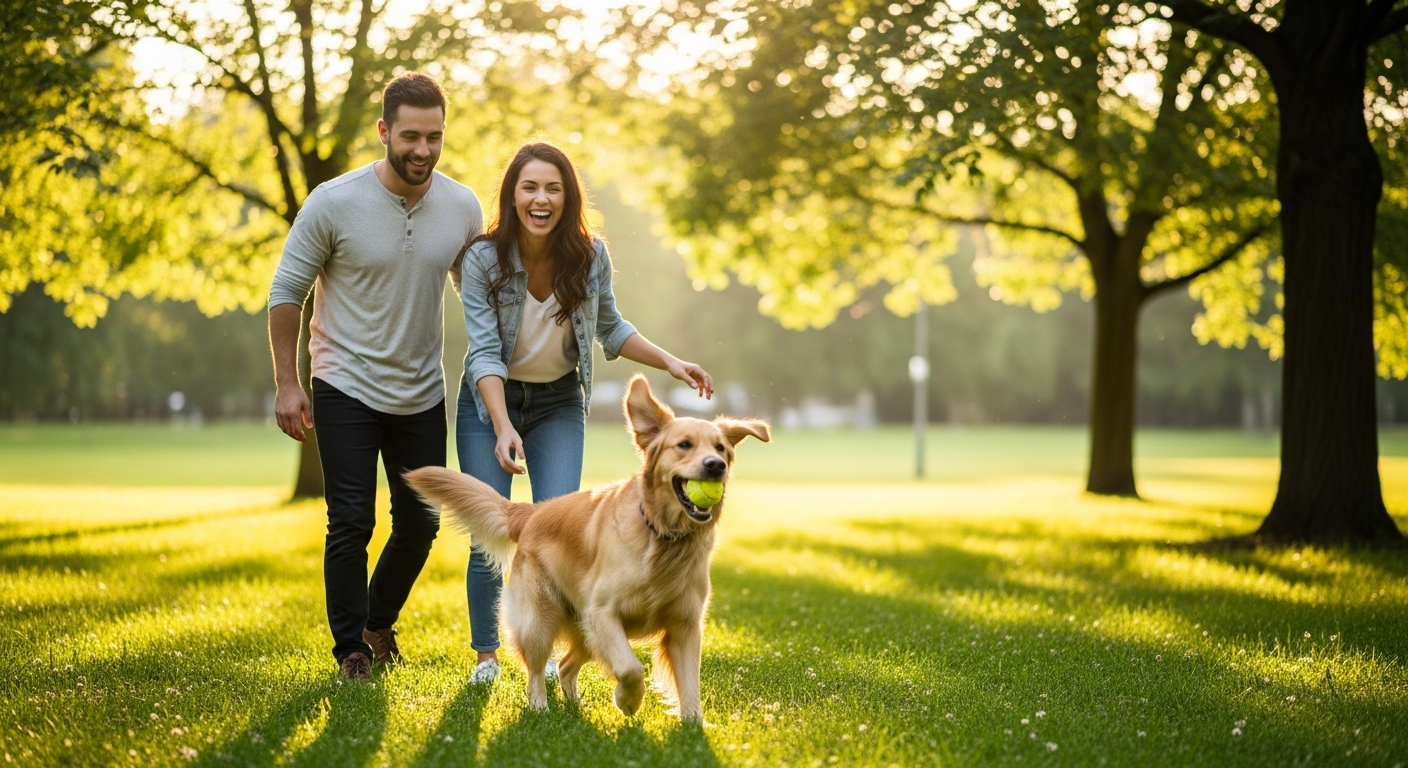
The most fun things to do with your dog are the ones that let them be a dog: sniffing, chasing, digging, licking, shredding, and hanging out with their people. Below are 50 concrete activities — indoor games, outdoor adventures, kid-friendly ideas by age, weirdly fun solo projects, and almost-free options — every one specific enough to start today, with the enrichment science that explains why they work.
Key takeaways
- Sniffing is exercise for the brain. Dogs who did daily nose work for two weeks became measurably more optimistic in a 2019 study — so "just sniffing" counts as a real activity.
- Licking and chewing are calming, not lazy. Research found long-lasting chews put dogs in more relaxed, positive emotional states, which makes lick mats and chew sessions legitimate rainy-day plans.
- Kids can join almost everything with the right job for their age: parallel play at 3–5, structured games at 6–9, real training responsibility at 10–13 — always with adult supervision.
- Novelty beats gear. A new walking route, a cardboard box, or dinner scattered in the grass often beats a $40 toy.
- Aim for a daily mix: one physical activity, one sniffing or puzzle activity, and one calm activity (licking, chewing, or couch time).
What counts as a "fun" activity for a dog?
Fun, for a dog, means getting to do dog things: use the nose, make choices, chase, chew, dig, and be near you. Canine enrichment research keeps landing on the same point — activities that let dogs express natural behaviors improve welfare more than activities that only burn energy. That's why this list mixes fetch and hikes with sniff walks, dig boxes, and lick mats. A 2019 study by Duranton and Horowitz found that just two weeks of daily nose work made pet dogs more optimistic in judgment bias tests, while heelwork practice didn't. Translation: the boring-looking sniffy stuff is doing heavy lifting.
There's a payoff for you too. A 2019 Scientific Reports study found dog owners were four times more likely to meet the 150-minutes-a-week physical activity guideline than non-owners, logging close to 300 minutes of weekly walking. Your dog is the best personal trainer who works for cheese.
What can I do with my dog indoors?
Indoor activities lean on your dog's two favorite low-key skills: sniffing and problem-solving. These twelve work in an apartment, on a rainy Saturday, or at 9 p.m. when the zoomies hit.
Play "find it" with dinner. Skip the bowl, scatter kibble across the kitchen floor or hide small piles around one room, and release your dog with "find it!" Ten minutes of searching tires most dogs more than a walk around the block.
Build a muffin-tin puzzle. Drop treats in a few cups of a muffin tin, cover every cup with a tennis ball, and let your dog figure out which balls hide the goods. Free, and it takes 30 seconds to set up.
Make a snuffle box. Crumple packing paper into a cardboard box, sprinkle kibble through the layers, and let your dog forage. Supervise shredders so cardboard stays enrichment, not dinner.
Play hide-and-seek. Have someone hold your dog (or use a sit-stay), hide behind a door or under a blanket, then call once. Dogs search for you by scent, and the reunion tail-wag is the whole point.
Teach one new trick this week. Spin, bow, high-five, or "touch" a target with their nose — five minutes a day, tiny treats, quit while it's fun. Trick training is concentrated one-on-one attention, which is what your dog actually wants.
Run a lick mat spa session. Smear plain yogurt, wet food, or xylitol-free peanut butter on a lick mat and freeze it for extra mileage. Licking and chewing are associated with calmer, more positive emotional states in dogs, making this the canine version of a bubble bath.
Set up a couch-cushion obstacle course. Weave between chair legs, hop over a broomstick on two stacks of books, tunnel under a draped blanket. Lure with a treat the first few rounds, then add a cue like "go!"
Play the shell game. Hide a treat under one of three cups, shuffle slowly, and let your dog nose or paw the winner. Start obvious and speed up as they catch on.
Hold hallway recall races. Two people sit at opposite ends of the longest hallway and take turns calling the dog, paying each arrival with a treat. You're secretly proofing the most important cue your dog knows.
Try indoor flirt-pole sprints. A flirt pole (a toy on a rope on a stick) gives high-drive dogs a chase outlet in a small space. Keep sessions short, play on carpet for traction, and let them win the toy often.
Have a movie night with a long-lasting chew. Pick a couch-friendly film, give your dog a bully stick or stuffed rubber toy, and just co-exist. Shared calm time is bonding too, and chewing is genuinely soothing for dogs.
Rotate the toy bin. Put two-thirds of the toys in a closet and swap the sets weekly. "New" toys reappear like magic, and your dog gets a novelty hit without you buying anything.
Got kids underfoot on that rainy day too? Our list of indoor dog games for kids turns these into family games with age-band rules.
What are the best outdoor activities to do with your dog?
Outside is where you add distance, water, dirt, and new smells. These twelve range from a five-minute upgrade to a full-day adventure.
Take a sniffari. Once or twice a week, let your dog pick the route and set the pace, sniffing as long as they want. It's slower than your usual loop, but scent is how dogs read the news, and choice itself is enriching.
Walk somewhere brand new. Drive ten minutes to a neighborhood, main street, or trailhead your dog has never smelled. A novel route is a firehose of information for a dog's nose — same distance, triple the enrichment.
Arrange a playdate. Skip the chaotic dog park day and invite one compatible dog friend to a fenced yard. Two dogs who know each other play harder and safer than a mob of strangers.
Hike a dog-friendly trail. Pick a shaded route with water access, bring more water than you think you need, and check leash rules first. Sniff breaks are part of the workout, not interruptions to it.
Set up sprinkler or kiddie-pool time. A $15 hard plastic kiddie pool with three inches of water turns a hot afternoon into an event. Toss in floating treats or toys for bonus bobbing.
Level up fetch. Add a rule: sit before the throw, or a "wait" while the ball rolls, then release. Impulse-control fetch tires the brain and the legs at once.
Build a legal dig pit. Fill a sandbox or a corner of the yard with loose sand or soil and bury toys and treats in it. Diggers gonna dig — better there than your tomato bed.
Go on a patio date. Take your dog to a dog-friendly café or brewery patio, order something, and practice calm settling on a mat under the table. Bring a chew; leave before they're over it.
Try DIY backyard agility. A broomstick jump, a row of cones (or buckets) to weave, a pause "table" made from a pallet. Keep jumps low, especially for puppies and seniors.
Go swimming. Lakes, dog beaches, and canine swim centers give big exercise with zero joint impact. Use a dog life vest for new or deep-water swimmers, and rinse off afterward.
Take a "just because" car ride. Windows cracked, dog safely harnessed or crated, destination: anywhere that ends in a walk or a pup cup. The ride itself is the event for most dogs.
Do a golden-hour photo walk. Bring your phone and a squeaker, and spend a walk getting one genuinely good picture of your dog. Future-you will be glad you did.
When school's out and the days are long, our 25 summer activities for kids and dogs goes deep on water games, heat safety, and road trips.
What are fun things to do with your dog and kids?
Kids and dogs can be a legendary duo, but the right activity depends on the kid's age. One rule covers every age band: an adult actively supervises, every time. The AVMA reports that children account for at least half of the 4.5 million dog bites in the US each year, and most serious incidents involve a familiar dog during ordinary interactions like hugging or disturbing a sleeping dog. Supervision isn't paranoia; it's how you make all of the fun below possible. For the full playbook on teaching kids and dogs to be safe together, see our complete guide to kids and dogs ages 3–13.
Ages 3–5: parallel play with an adult on the leash
Treat toss into a bowl. Your preschooler tosses treats one at a time into a bowl on the floor while you handle the dog. The kid gets a job, the dog gets treats, and nobody's fingers are near teeth.
Read to the dog. Have your child read (or "read") a picture book aloud while the dog settles on a mat nearby. It builds a calm association for both of them and doubles as reading practice.
Stuff the snuffle mat together. Little hands are great at poking kibble into a snuffle mat's fabric folds. The child preps the puzzle, then watches from the couch while the dog solves it.
Play follow-the-leader on a walk. The adult holds the leash; the child walks in front and picks the turns — left at the mailbox, stop at the big tree. The kid feels in charge, the adult stays in control.
Draw the dog's portrait. Set the dog up with a chew so they hold semi-still, and let your child draw them. Tape the gallery to the fridge and date each one.
Ages 6–9: real games with real rules
Kid hides, dog seeks. Your child hides in an easy spot with a handful of treats and calls the dog's name once. Being "found" by a happy dog never stops being thrilling at this age.
Teach a trick together. Give your kid the clicker or the marker word ("yes!") while you handle the lure, and let them "own" one trick, like high-five. Their name goes on the trick forever.
Bake dog treats. A two-ingredient recipe (oat flour plus mashed banana or pumpkin, baked at 350°F until firm) is a kid-friendly kitchen project with a very enthusiastic taste tester. Skip raisins, chocolate, and xylitol — all toxic to dogs.
Design a backyard obstacle course. Kids this age love drawing the course map, setting up jumps and tunnels, and timing runs. Let them redesign it weekly; novelty is the point.
Hold a Dog Olympics. Three events — fastest recall, longest sit-stay, best trick — with paper medals your kids make. This scales up beautifully into a dog birthday party kids will love.
Host a doggy talk show. One kid is the host, the dog is the celebrity guest, and someone films the "interview" on a phone. Pure silliness, and those clips become family treasures.
Ages 10–13: responsibility that feels like privilege
Hand over one training goal. A tween can own "loose-leash walking past the neighbor's cat" or "wait at the door" for a month, tracking progress in a notebook. Real responsibility, real results, real pride.
Join a kids' dog-sport class. Many training clubs run junior handler or beginner agility classes where tweens run the course with the family dog. It's a sport where the teammate is fluffy.
Produce a trick video. Let your tween storyboard, film, and edit a 30-second video of the dog's best tricks, following your family's rules about where videos go. Directing the shoot takes actual patience and skill.
Plan the dog's birthday party. Guest list, dog-safe cake, games, decorations — a tween can run the whole event with you as the budget office. It's project management with frosting.
Map and lead a new walk. Your tween picks a new route on a map app, navigates, and handles the dog (with you along). Route-planning plus dog-handling is a genuine life-skills combo.
Do a shelter service project. Bake treats or braid t-shirt tug toys for a local shelter and deliver them together. Kids this age are wired for purpose, and shelters always need enrichment items.
What are some weirdly fun things to do with your dog by yourself?
No kids, no agenda, nobody watching. These are the activities dog people don't admit to at parties but should.
Give your dog a voice. Narrate their inner monologue out loud — their scathing review of the mail carrier, their legal argument for a second dinner. Families are doing this out loud together now too; a talking collar like SPEAK ($199 Founder's Edition plus $5/month) gives the dog one shared, hilarious voice everyone's in on. For inspiration, here's what your dog would say if they could talk.
Teach one completely useless trick. "Crawl like a spy." "Say your prayers." "Play dead when I make finger guns." Useless tricks are pure joy engineering, and they're the ones guests remember.
Run a taste test. Offer three dog-safe toppers (a green bean, a blueberry, a lick of plain yogurt) and rank the reactions like a food critic. Congratulations, you now have data on your dog's palate.
Build a blanket fort for two. Couch cushions, a sheet, fairy lights if you're committed, and a chew for your co-architect. There's no reason. That's the reason.
Learn basic dog massage. Look up simple canine massage strokes and give your dog five slow minutes of ear and shoulder work in the evening. Many dogs melt, and you'll learn your dog's body well enough to spot lumps or soreness early.
What are fun things to do with your dog that are almost free?
Enrichment runs on novelty and choice, not money. These four cost pocket change at most.
Declare an errand-buddy day. Bring your dog on your dog-friendly errands — many hardware stores and garden centers allow leashed dogs. New floors, new smells, new admirers: it's a field trip disguised as a chore.
Braid a t-shirt tug toy. Cut three old t-shirts into strips, knot one end, braid tightly, knot the other. Ten minutes of crafting, months of tug, zero dollars.
Find a sit-spot. Pick a bench with foot traffic, split a quiet 20 minutes with your dog, and just watch the world together. Calm shared observation is wildly underrated as bonding.
Start a weekly micro-tradition. Friday pup cup, Sunday sniffari, first-snow zoomies photo — pick one tiny ritual and repeat it until it's sacred. Dogs love predictable joy, and so, it turns out, do families.
How do you adapt these activities for puppies and senior dogs?
Scale the body work down and keep the brain work; nearly everything on this list adjusts with one tweak. Puppies and seniors both thrive on sniffing, licking, and puzzle games — it's the jumping, sprinting, and marathon sessions that need editing.
For puppies, keep sessions to five minutes, skip jumps and repetitive fetch until their growth plates close (ask your vet when — it varies by breed size), and treat every activity as socialization. The patio date, the errand-buddy day, and the new-neighborhood walk are gold for a puppy learning that the world is safe. Watch for the overtired-puppy crash: a pup that suddenly turns into a land shark usually needs a nap, not more play.
For senior dogs, swap the flirt pole for a slower shell game, shorten walks but multiply the sniff stops, and lean hard on the calm bucket — lick mats, gentle massage, sit-spot sessions. Nose work is especially valuable for older dogs because it exercises the brain when joints can't cash the checks the ball writes. If your senior slows down suddenly or avoids an activity they used to love, that's a vet conversation, not a motivation problem.
For any dog, new activity plus intensity is the risk combo. Introduce one new thing at a time, keep it easy the first few tries, and let your dog's enthusiasm set the ceiling.
How do you turn a list of 50 into an actual routine?
Pick one activity from three buckets each day: something physical (a walk, fetch, swimming), something sniffy or brainy (a sniffari, "find it," a puzzle), and something calm (a lick mat, a chew, fort time). That mix maps onto what enrichment research says dogs need — movement, natural behaviors, and decompression — without requiring a spreadsheet. Keep sessions short, quit while your dog still wants more, and rotate through the list so nothing goes stale. The dog doesn't care whether today's activity cost $40 or was a cardboard box. The dog cares that you showed up.