Kids and Dogs: A Complete Guide to Raising Them Together (Ages 3–13)
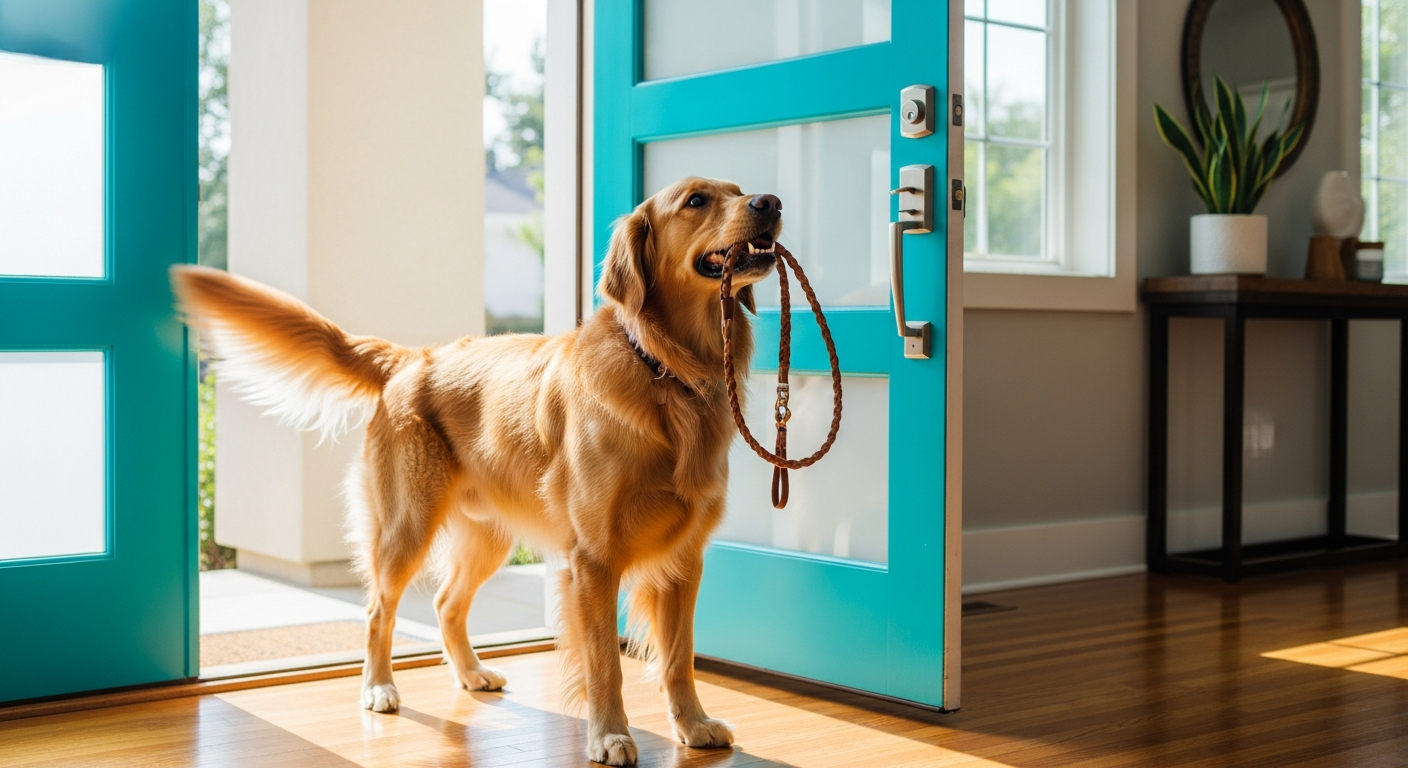
Raising kids and dogs together works best when you match the job to the age: preschoolers (3–5) interact only with an adult actively watching, elementary kids (6–9) take on real chores like feeding and grooming with supervision, and tweens (10–13) can handle most daily care, including walks in familiar places. Layer on two family rules, "let sleeping and eating dogs be" and "when the dog walks away, playtime is over," and you've prevented most of what goes wrong.
This guide walks through each age band: what your child can safely do, what supervision actually means, which chores build responsibility, how to play together, and what the research really says about growing up with a dog.
Key takeaways
- Supervision is active, not ambient. More than 4.5 million Americans are bitten by dogs each year, and children account for at least half of the injured, according to the AVMA. Most incidents involve a familiar dog during everyday interactions.
- Ages 3–5: gentle petting and simple helper tasks (scooping food, refilling water) with an adult within arm's reach. Never alone with the dog, ever.
- Ages 6–9: real chores begin. Kids this age can become the family's primary feeder, help groom, and play fetch in the yard while an adult supervises.
- Ages 10–13: most day-to-day care, including feeding, brushing, poop duty, and walks with a well-mannered dog in familiar areas. Adults still own vet care, training decisions, and final responsibility.
- The benefits are real and measured. Preschoolers in dog-owning families were 23% less likely to have social-emotional difficulties in a study of 1,646 households, and dog-owning kids get significantly more physical activity.
What are the non-negotiable safety rules for kids and dogs?
Every family needs a short list of rules that apply at every age, because bite prevention is mostly about preventing predictable situations. The American Veterinary Medical Association reports that more than 4.5 million people are bitten by dogs each year in the US, children make up at least half of those injured, and young children are the most likely to suffer serious injuries to the face, head, and neck. The hard part for parents: most bites to kids come from a dog they know, during moments that look harmless.
Here are the rules worth laminating on the fridge:
- Never leave a young child alone with a dog. Any dog, including yours. The AKC is blunt about this: no child should be left unsupervised with a dog of any age.
- Let sleeping, eating, and chewing dogs be. Interrupting a dog with food, a bone, or mid-nap is one of the most common bite setups the AVMA highlights, precisely because it seems innocent to a child.
- No hugging, no kissing the face, no climbing. Kids show love the way primates do, with arms around the neck. Dogs often experience that as restraint. Teach petting on the chest, shoulders, and back instead of reaching over the head.
- The dog's safe space is off-limits. A crate, bed, or quiet corner where the dog can retreat and no child follows. When the dog goes there, the interaction is over, no exceptions.
- When the dog walks away, the game ends. This one rule teaches consent better than any lecture.
- Always ask before touching an unfamiliar dog. Ask the owner first, then let the dog choose to approach.
These rules protect the dog as much as the child. A dog that trusts it will never be cornered, grabbed, or startled is a dramatically safer dog.
How do you teach a child to read dog body language?
Teach kids that dogs "talk" with their bodies, and that the polite thing to do is listen. The AVMA emphasizes that a dog's warning signs are subtle and easy to miss: a dog that stiffens, turns its head away, licks its lips, yawns outside of naptime, shows the whites of its eyes, tucks its tail, or simply tries to leave is saying "I need space." A growl is the loud version, and it should never be punished, because a dog punished for growling may skip the warning next time.
Make it a game rather than a lesson. During calm moments, narrate together: "Look, Biscuit's tail is loose and wagging low, and she's leaning into you. That means 'more please.'" Then flip it: "She just turned her head away. What is she telling you?" Kids as young as four can learn a simple traffic-light system: green (loose, wiggly, leaning in) means keep going, yellow (stiff, looking away, lip licking) means stop and give space, red (growling, backing away, showing teeth) means walk away and get a grown-up.
Praise your child loudly every time they spot a signal and back off on their own. You're not just preventing bites; you're teaching empathy with a live practice partner.
Quick reference: what can kids do with the dog at each age?
Every child and every dog is different, so treat this as a starting point, not a license. "Needs supervision" means an adult actively watching and close enough to step in.
| Age band | Can do | Needs supervision | Not yet |
|---|---|---|---|
| 3–5 | Gentle petting on chest and back; tossing a toy for the dog; putting dog toys in a basket; "helping" scoop pre-measured food and refill water | All of it. Every dog interaction, every helper task, adult within arm's reach | Walking the dog; feeding independently; hugging or picking up the dog; being alone with the dog for any length of time |
| 6–9 | Refilling water; brushing with a soft brush; practicing known cues like sit with adult coaching; picking up toys | Feeding as the family's "primary feeder"; fetch and yard play; poop pickup (with hygiene coaching); tug with drop-it rules | Solo walks; leash control of a strong dog; breaking up dog squabbles; being left home alone with the dog |
| 10–13 | Feeding on schedule; brushing and coat checks; poop duty; training practice; supervised walks graduating to solo walks with a well-mannered dog in familiar areas | Walks in busy areas or with reactive/strong dogs; bath time; nail-adjacent grooming; meeting unfamiliar dogs | Full responsibility for the dog's welfare; vet decisions; handling dog-dog conflicts; caring for the dog with no adult backstop |
Ages 3–5: what can preschoolers safely do with a dog?
Preschoolers can pet gently, toss toys, and "help" with tiny care tasks, always with an adult actively supervising, meaning watching the interaction, not scrolling nearby. Kids this age are impulsive, loud, fast, and built at exactly dog-face height, which is why this is the highest-risk age band and the one where supervision does all the work.
What supervision looks like at 3–5: you are within arm's reach whenever child and dog share space. Use baby gates, crates, and closed doors liberally so that "dog time" is a deliberate activity, not a constant background condition. When you can't actively watch, separate. That's not sad; it's how the dog gets rest and the child learns that dog access is earned.
Age-appropriate chores (3–5). The AKC's guidance for families says preschoolers can scoop food into the bowl, refill the water dish, and help brush with a soft brush, with you alongside. Add "toy patrol" (putting dog toys back in the basket) and letting them hand you supplies. The point isn't efficiency, it's the identity: I take care of my dog.
Play ideas (3–5):
- You throw, they cheer. Parent handles the ball; the child claps and calls the dog's name for the return. Fetch without the face-level grab.
- Treat toss. Child tosses a treat away from themselves for the dog to find. Teaches distance-friendly affection.
- Story time with the dog. Child "reads" a picture book aloud while the dog settles nearby. Genuinely calming for both species.
- Cookie sit. With your hand over theirs, the child asks for a sit and delivers the treat flat-palmed. First taste of being listened to.
One thing to skip: posed photos where you place a toddler on or against the dog. They're the classic setup for the "he's never done that before" bite.
Ages 6–9: what chores and games are right for elementary kids?
Kids aged 6–9 are ready for real, named responsibilities and real play, with an adult still supervising dog time and owning the follow-through. This is the golden window: old enough to follow multi-step instructions and control their bodies, young enough to find dog chores genuinely exciting.
What supervision looks like at 6–9: you no longer need to hover within arm's reach of a trustworthy dog, but you should be present and paying attention whenever they're together, and the child should never be left home alone in charge of the dog. Keep enforcing the family rules; this is the age where kids test whether "let sleeping dogs be" really applies to them.
Age-appropriate chores (6–9). Per the AKC, kids in this range can become the family's primary feeder, clean up spilled food and water, and, depending on the dog and your setup, take the dog into the yard to play. Add brushing sessions, refilling water without being asked, and poop pickup with proper handwashing habits. A chore chart with checkboxes works wonders; so does the title "Chief Breakfast Officer."
Play ideas (6–9):
- Real fetch and flirt-pole games, with a drop-it rule before every throw.
- Hide-and-seek. The child hides, calls once, and the dog seeks. Recall training disguised as a game.
- Treat treasure hunts. Hide kibble around a room and let the dog's nose work. Our roundup of indoor dog games for kids has fifteen of these for rainy days.
- Trick training. Kids this age make surprisingly good trainers: spin, shake, high-five, all with tiny treats and big praise.
- Backyard agility. A broomstick jump and a blanket tunnel are plenty.
This is also the age when the dog starts becoming a character in family life rather than a fixture, with kids narrating what the dog is thinking and giving it a voice at the dinner table. Plenty of families lean into it; a talking collar like SPEAK ($199 Founder's Edition plus $5/month) turns that running joke into a shared family game, giving the dog a funny voice everyone's in on. Rituals like that do quiet work, and building a few deliberate family dog traditions gives kids and dogs a shared rhythm to grow up inside.
Ages 10–13: how much dog responsibility can a tween handle?
Tweens can handle most day-to-day dog care: feeding on schedule, grooming, poop duty, training practice, and walks, first supervised, then solo with a well-mannered dog in familiar, low-traffic areas. The AKC puts kids 10 and up at "most day-to-day pet care," with one crucial caveat: adults remain ultimately responsible for the animal's welfare, vet visits, and everything the child forgets.
What supervision looks like at 10–13: you shift from watching interactions to auditing systems. Spot-check the water bowl, the feeding log, the walk schedule. The question changes from "is everyone safe?" to "is the care actually happening?" And it often isn't, some weeks. That's not failure; that's the lesson. Calmly hand the missed task back rather than silently doing it yourself, or the dog teaches your tween that commitments evaporate when ignored.
The solo-walk decision. There's no universal age; it depends on the kid, the dog, and the route. Before a tween walks the dog alone, they should demonstrate, with you trailing behind, that they can keep leash control when a squirrel happens, cross streets deliberately, refuse greetings with unknown dogs, and come home on time. Size matters too: a 70-pound adolescent Lab can pull a 75-pound kid off their feet. Match the dog to the child, not the child's enthusiasm to the dog.
Age-appropriate chores (10–13): full feeding responsibility, brushing and basic coat checks, water duty, poop patrol, helping at bath time, practicing training cues daily, and prepping the dog's gear for trips. Tweens can also take creative ownership: teaching a new trick each month, or planning the games for a dog birthday party the whole family attends.
Play ideas (10–13): jogging or biking-adjacent walks with an appropriate dog, serious trick chains, backyard agility courses with real timing, scent games with graduated difficulty, and organizing summer activities that mix kids and dogs, from sprinkler sessions to camping trips. Tweens who feel too old for "playing" often re-engage when it's framed as training or coaching.
What are the real developmental benefits of raising kids with dogs?
The measured benefits fall into three buckets: social-emotional development, physical activity, and empathy. This is one of the better-studied corners of the human-animal bond, and the numbers are worth knowing.
Social-emotional development. The PLAYCE study, published in Pediatric Research, surveyed 1,646 Australian households with children aged two to five. Kids from dog-owning homes were 23% less likely to have overall difficulties with emotions and social interactions than kids without a dog. The dose mattered: children who joined family dog walks at least once a week were 36% less likely to show poor social-emotional development, and kids who played with their dog three or more times a week were 74% more likely to regularly show considerate behavior, like sharing.
Physical activity. A follow-up line of research funded by the Human Animal Bond Research Institute found dog-owning preschoolers logged about eight more sessions of unstructured physical activity per week than non-dog kids, with dog play and family walks also associated with less screen time and better sleep. In a country where getting kids off screens is its own genre of parenting advice, the dog is a furry intervention that begs to be deployed daily.
Empathy and responsibility. A review of childhood pet attachment published in the International Journal of Environmental Research and Public Health found that caring for a pet gives children practice taking responsibility for another living being, and that stronger child-pet attachment is associated with more compassionate attitudes and humane behavior. Note the mechanism: it's the caring, not the mere presence of a dog. A dog whose entire care falls on Mom teaches a kid nothing except that Mom does everything. The chores in this guide aren't just labor distribution; they're the delivery system for the benefits.
One honest caveat: these are largely observational studies, so they show strong associations, not airtight proof that dogs cause the outcomes. Families who choose dogs may differ in other ways. But the pattern is consistent across countries and study designs, and we dig into the evidence, including where it's thinner, in do pets make kids happier?
What are the biggest mistakes parents make with kids and dogs?
The most common mistakes are trusting the dog too much, punishing warnings, and assigning responsibility without backup. Each one is fixable.
- "He's fine with kids." Every dog has a limit; good dogs just have distant ones. Tolerance isn't enjoyment, and a dog that endures ear-grabbing for years can still have a bad day. Watch for enjoyment (leaning in, coming back for more), not mere endurance.
- Punishing the growl. A growl is the smoke alarm. Punish it and you don't remove the fire, you remove the alarm.
- Passive supervision. "I was in the room" is not supervision if you were on your phone. With kids under six, active watching is the whole safety system.
- Making the child the dog's only caretaker. "The dog is YOUR responsibility" sounds character-building and ends with a neglected dog and a guilty kid. Kids contribute; adults remain accountable.
- Skipping the dog's needs. A dog that's under-exercised and never gets a break from children is a dog running out of patience. Daily exercise, real rest, and a kid-free retreat space are bite prevention.
- Forgetting the fun. Safety rules without joy turn the dog into a chore. The families that thrive are the ones playing together, and if you're short on inspiration, let each kid pick one game or activity per week and put it on the calendar.
How do you know it's working?
You'll see it in small moments: your four-year-old freezes mid-reach and says "she walked away, game over." Your eight-year-old feeds the dog before breakfast without being asked, twice in one week. Your twelve-year-old comes back from a solo walk and reports, unprompted, that Biscuit seemed nervous around the construction site so they crossed the street. The dog, meanwhile, chooses to lie down near the kids instead of retreating from them.
That's the whole project: a child who can read another creature's feelings and act on them, and a dog that trusts every small human in the house. Get the age-banded jobs right, keep the supervision honest, and the growing up takes care of itself, for both of them.