15 Indoor Dog Games for Kids: Rainy-Day Fun for the Whole Family
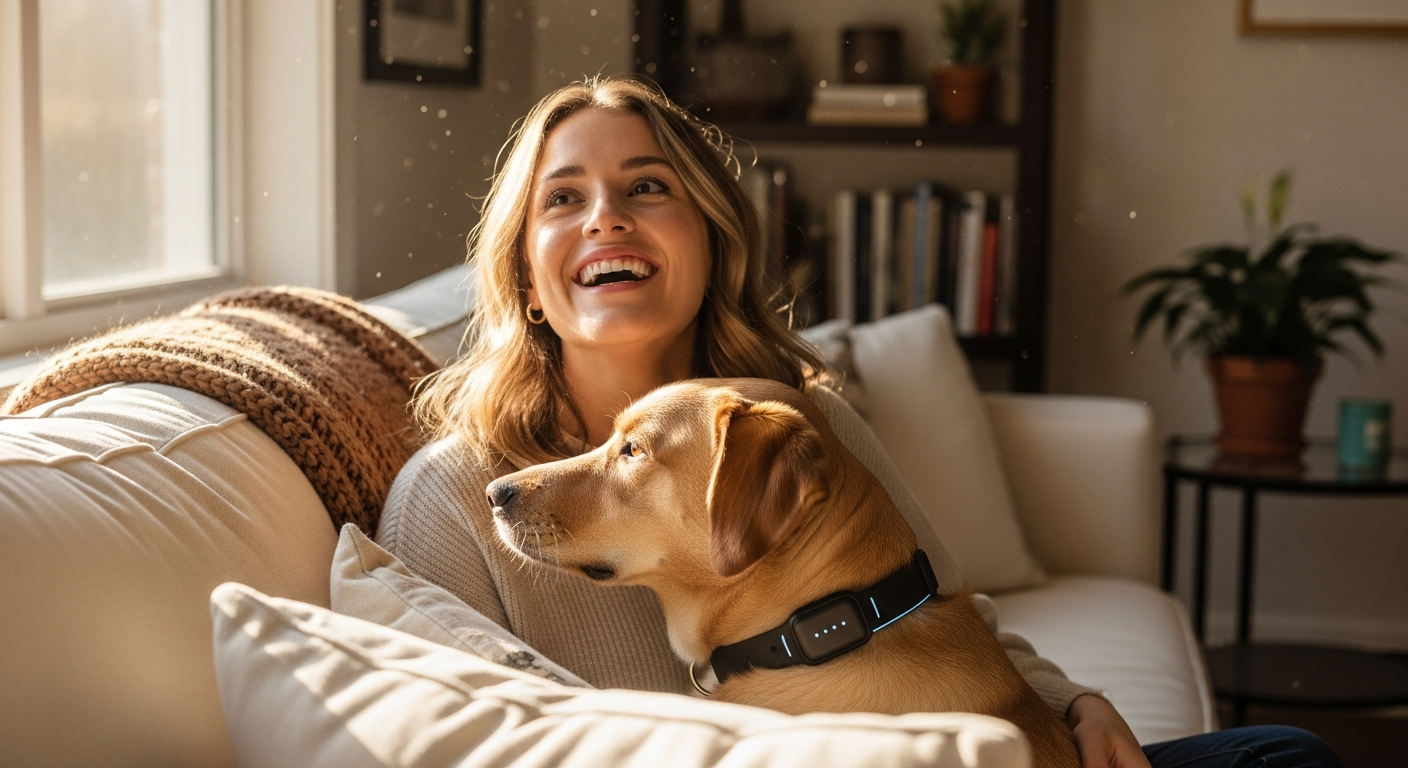
The best indoor dog games for kids need no special gear: muffin-tin treat puzzles, a "find it" scent game, an indoor obstacle course, a snuffle towel, and hide-and-seek all work with items already in the house, take under five minutes to set up, and suit different kid ages and dog energy levels. Below are 15 of them, sorted so you can match the game to the day.
Key takeaways
- All 15 games use household items — muffin tins, towels, cardboard boxes, cups — not special toys.
- Games are grouped by energy level: high-movement games (obstacle course, fetch, freeze dance) for restless dogs, and quiet games (licking mat, snuffle towel) for winding down.
- Each game lists a best-fit kid age band (3–5, 6–9, 10–13) and a supervision note where one matters.
- Young kids (under about 6) should always have an adult in the room with the dog, per AVMA guidance.
- A dog's nose is roughly 100,000 times more sensitive than a human's, which is why scent games tire dogs out fast — no yard required.
How do I keep dog-kid play safe indoors?
Set the rules before the game starts, not during it. Have the dog sit calmly while kids get in position, keep the dog's toys and food bowl off-limits during play, and stop any game the moment the dog looks tense (ears back, stiff body, turning away) rather than pushing through it.
The AVMA notes that more than 4.5 million people are bitten by dogs in the US each year, and children account for at least half of those injuries — most involving a dog the child already knows. That's a reason to stay in the room for kids under 6, and to teach older kids to read a dog's body language before running a game solo. See our complete guide to kids and dogs ages 3–13 for more on matching activities to age and temperament.
15 indoor dog games for kids
1. Muffin-tin puzzle
You'll need: a muffin tin, a few tennis balls or small toys, small treats. How to play: Drop a treat into each muffin cup, cover each one with a ball, then let the dog nose and paw the balls out one at a time. Refill and repeat once the dog gets the hang of it. Best age: 3–5. Supervision: Watch that little hands don't take the dog's turn — let the dog do the work.
2. Find it (scent game)
You'll need: 5–10 treats. How to play: Have the dog sit and stay (or hold their collar) while a kid hides treats around one room — behind a chair leg, under a cushion corner. Release the dog with "find it!" Start with treats in plain sight and hide them better each round. Best age: 3–5 and 6–9.
3. Indoor obstacle course
You'll need: couch cushions, a broom laid on two low boxes, a cardboard box tunnel, a laundry basket. How to play: Line up 4–5 obstacles down a hallway (weave, jump, tunnel, sit-stay). Walk the dog through once on a leash to teach it, then let a kid run alongside and cheer at each station. Time it and try to beat the record. Best age: 6–9 and 10–13. Supervision: Keep furniture jumps low for small or senior dogs.
4. Hide-and-seek
You'll need: nothing (treats optional). How to play: One kid holds the dog while another hides in a nearby room, then calls the dog's name once. Big praise and a treat when found. Rotate hiders and add a second hiding sibling for older kids. Best age: 6–9.
5. Snuffle towel
You'll need: a plain bath towel, a handful of kibble or treats. How to play: Scatter kibble across the towel, then loosely roll or bunch it up so the food is hidden in the folds. Let the dog sniff and unroll it to find each piece. This is a quiet, low-energy option for right before nap or bedtime. Best age: 3–5.
6. Licking mat craft
You'll need: a silicone licking mat (or a flat plate), plain yogurt or peanut butter without xylitol. How to play: Have a kid spread a thin layer of yogurt or peanut butter into the mat's grooves, freeze it for 20 minutes, then give it to the dog to lick. This is a calm-down activity, not a running game — great after a high-energy round. Best age: 3–5. Supervision: An adult should check any spread for xylitol, which is toxic to dogs.
7. Cup shuffle
You'll need: 3 opaque cups, 1 treat. How to play: Show the dog the treat, place it under one cup, then slowly shuffle two cups (leave the treat-cup still at first for young dogs or kids). Let the dog knock over the right cup to "win" the treat. Best age: 6–9.
8. Name that toy
You'll need: 3–4 different toys with distinct names ("bone," "duck," "rope"). How to play: Spread the toys on the floor. A kid asks the dog to bring a specific one by name, rewarding any correct choice. This works best with dogs who already know a few toy names — build up one toy at a time if not. Best age: 10–13.
9. Freeze dance
You'll need: music (phone or speaker). How to play: Play music and have kids and the dog move around the room; when the music stops, everyone freezes (dog included, with a "sit" cue). Whoever moves last is out, or just keep going for laughs. Best age: 3–5. Supervision: Clear furniture corners for safe running.
10. Cardboard box treasure hunt
You'll need: 3–5 cardboard boxes, treats or a favorite toy. How to play: Put a treat in one box out of several open boxes scattered around a room. Let the dog sniff through the boxes to find the prize, then reset with the boxes in new spots. Best age: 6–9.
11. Egg carton puzzle
You'll need: an empty cardboard egg carton, small treats. How to play: Drop treats into a few of the cups, close the lid, and let the dog nose the lid open and sniff out which cups have food. Tape it shut loosely at first if the dog is a fast learner. Best age: 3–5.
12. Trick relay ("Simon says" for dogs)
You'll need: treats, cues the dog already knows (sit, down, spin, shake). How to play: A kid calls out a chain of 3–4 known cues in a row (sit, shake, down, spin), rewarding the dog after completing the whole sequence. Add a new cue to the chain each round. Best age: 10–13.
13. Balloon keep-it-up
You'll need: one balloon. How to play: Kids bat a balloon back and forth while the dog watches or joins in with its nose or paws, keeping it off the floor. Stop immediately if the balloon pops — many dogs startle at the sound. Best age: 6–9. Supervision: Skip this one for noise-sensitive dogs, and keep popped balloon pieces away from the dog's mouth.
14. Red light, green light
You'll need: nothing. How to play: A kid stands across the room as "traffic light" and calls "green light" (dog and kids move toward them) or "red light" (everyone freezes, dog included with a sit cue). Whoever reaches the traffic light first wins that round. Best age: 10–13.
15. Indoor fetch, hallway edition
You'll need: a soft ball or plush toy, a clear hallway. How to play: Sit at one end of a hallway with the dog and roll (don't throw) a soft ball to the other end. Reward the dog for bringing it back and dropping it, then repeat. Best age: 3–5. Supervision: Roll gently in tight spaces with toddlers nearby.
How do I match a game to my dog's energy level?
Pair one high-movement game with one quiet game per session instead of running five active games in a row. Obstacle courses, fetch, freeze dance, and red light green light burn physical energy; muffin-tin puzzles, find it, snuffle towels, and licking mats burn mental energy without the running. A 2019 nosework study found dogs given regular scent-search sessions showed more optimistic behavior afterward — a reminder that a five-minute sniffing game can matter as much as a lap around the block.
Bringing rainy days into the family routine
Rainy-day games work best as a habit, not a one-off — the same way family dog traditions or a regular walk routine build a rhythm kids look forward to. If your family already gives the dog a voice through an AI collar like SPEAK ($199 Founder's Edition, $5/month), a muffin-tin win or an obstacle-course record is exactly the moment that earns a funny in-character reaction — entertainment and bonding, nothing more.
For more ways to fill a long weekend, see our summer activities for kids and dogs and dog birthday party ideas.