Back-to-School and a Sad Dog: Easing the Empty-House Blues
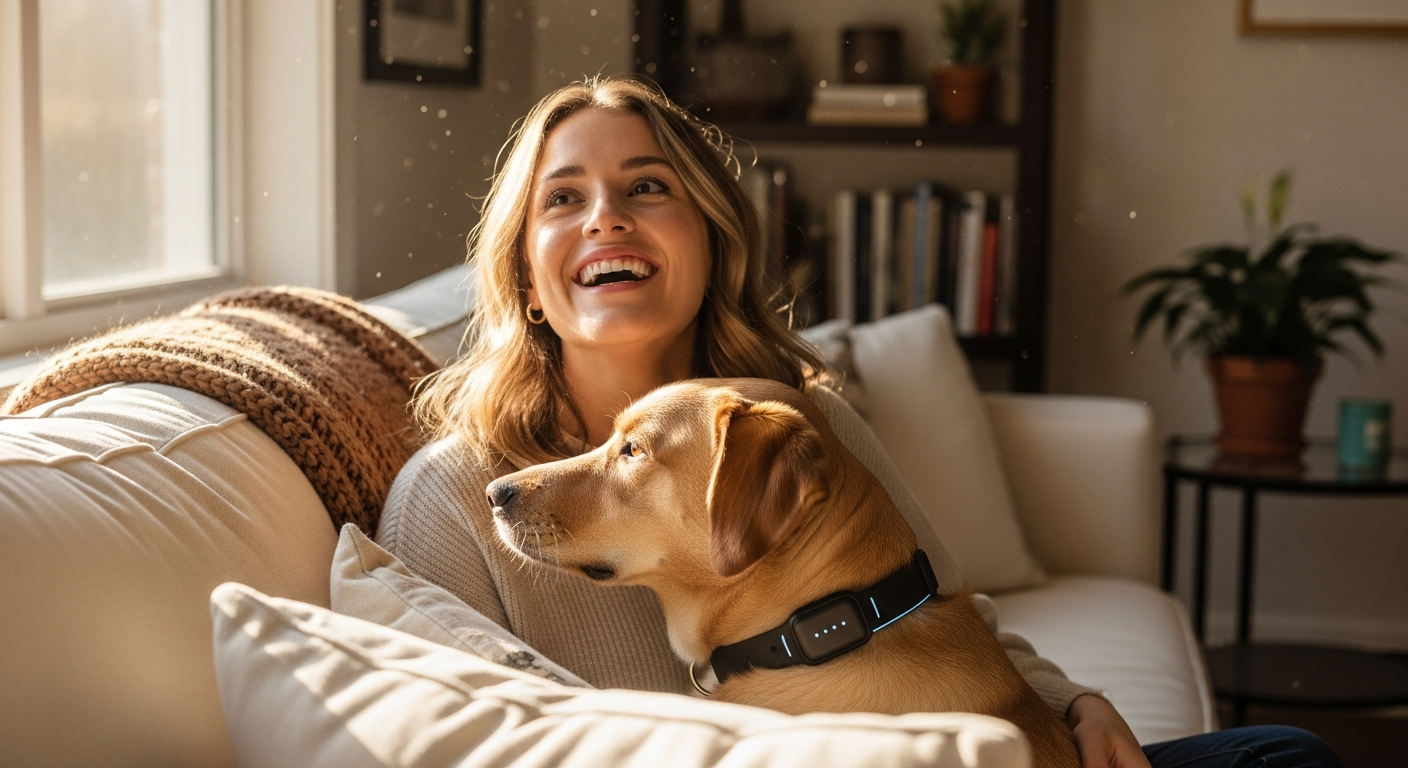
Most dogs adjust to an empty house within one to two weeks of school starting back up, as long as you ease into it: short practice departures, real exercise before you leave, and something to do while you're gone. A dog moping by the door the first few days is normal. A dog destroying the door frame or howling for hours is a different problem, and it's worth handling on purpose instead of waiting for it to pass.
Key takeaways
- Most dogs settle into a new school-year schedule within one to two weeks. Genuine separation anxiety is a smaller, more specific problem, not the default outcome.
- Gradual, low-key departures beat a dramatic goodbye — practice short absences before you need a full school day.
- A dog that's genuinely tired handles alone time better. Exercise before you leave matters more than almost anything you do after.
- Enrichment (puzzle toys, frozen Kongs, a scattered-kibble hunt) covers the first restless stretch, which is when most alone-time stress shows up.
- Watch for the real warning signs — chewing at doors, house soiling, non-stop barking, escape attempts — and loop in your vet if they don't fade after a couple of weeks.
Why does my dog get sad when school starts again?
Dogs run on routine, and summer built a specific one: people home, snacks dropping, someone around to play with most of the day. The AKC lists a sudden switch in a household's daily schedule as one of the recognized triggers for new or worsening separation-related stress in adult dogs, right alongside things like a move or a family member's absence — and the first week of September is exactly that kind of switch, just in reverse of what a "moving to more people at home" change would look like (AKC).
That doesn't mean something is wrong with your dog. It means the day went from full to quiet fairly fast, and dogs notice.
How long does it take a dog to adjust to an empty house?
For most dogs, one to two weeks of a consistent routine is enough. The ASPCA's guidance is to build up absences gradually — start with departures shorter than the time it takes your dog to get visibly upset, then add time slowly over days, rather than going straight from a full house to a full school day (ASPCA). If your dog handled daycare, errands, or your own workday fine before summer, that adjustment period is often shorter — the schedule is familiar, just newly reintroduced.
Practicing departure cues without actually leaving helps too: grab your keys, put on your shoes, then sit back down. Dogs learn to read those cues as "this could mean nothing," which takes some of the charge out of the real thing.
What's the difference between normal adjustment and real separation anxiety?
A 2015 study published in PLOS ONE surveyed over a thousand dog owners in Germany and Hungary and found signs of separation-related distress in roughly 18% to 33% of dogs, depending on the country — a reminder that some degree of alone-time stress is genuinely common, not rare (Konok et al., PLOS ONE, 2015). The dividing line isn't "does my dog seem a little sad," it's whether specific, disruptive behaviors show up consistently.
The AKC's list of real separation anxiety signs is specific: destructive chewing or scratching, especially at doors and windows the dog associates with your exit; house soiling in a dog who's otherwise reliably trained; nonstop barking or howling; and frantic attempts to escape a crate or room that can injure the dog (AKC). One chewed shoe on day two is a bad afternoon. A door frame gouged down to the wood every day for two weeks is a pattern worth addressing directly.
What daily routine actually helps a dog handle being alone?
Four things do most of the work, and none of them require special gear.
Exercise first, not after. The ASPCA recommends at least 30 minutes of real aerobic activity — a brisk walk, a fetch session, a run if your dog is up for it — ideally right before you leave, since a tired dog is far more likely to settle down and nap than pace (ASPCA). A five-minute bathroom-break walk before an eight-hour day isn't the same thing.
Give them a job for the first hour. A frozen Kong, a scatter of kibble hidden around a room, or a slow-feeder puzzle keeps a dog occupied through the window right after you leave, which is usually when stress peaks and then drops off.
Keep goodbyes and hellos boring. Skip the long, emotional goodbye and the huge, excited welcome home — both teach your dog that your coming and going is a big deal worth getting worked up about. A calm "back soon" and a calm "hey, good to see you" work better.
Build the routine before you need it. If the school-year schedule is new, practice short versions of it over a weekend rather than debuting the full day cold. This is the same gradual-departure idea behind a lot of other family routines — the kids and dogs guide covers more on building predictable, dog-friendly habits as a family.
Should I leave the TV or radio on for my dog?
It can help take the edge off ordinary quiet, but it's not a cure for real separation anxiety. Familiar household sound — a TV at normal volume, a talk-radio station, even a white-noise machine — can make an empty house feel less abandoned to a dog who's simply adjusting to more alone time. Both the AKC and ASPCA note it as a reasonable, low-effort comfort. What it doesn't do is calm a dog in genuine distress; a dog with true separation anxiety usually isn't soothed by background noise, so treat this as one small piece of the routine, not the whole plan.
Can a talking collar help with the after-school adjustment?
It can help the family side of this more than it helps the dog's stress directly. Some households use an AI collar like SPEAK ($199 Founder's Edition, $5/month) to give the dog a funny, in-character "voice" for the after-school reunion — a dramatic recap of the dog's very boring, very lonely day, read in a voice the kids picked out. It's entertainment and bonding, not a treatment for anxiety, but it's a good way to turn the first five minutes home into something the kids look forward to instead of just a routine. If you're curious whether it's worth it for your family, our honest breakdown of talking dog collars covers the pricing and what it actually does.
When should I call a vet or trainer instead of waiting it out?
If the behavior is severe — self-injury from trying to escape, destruction that goes beyond a chewed toy, or distress that hasn't eased after two to three weeks of a consistent exercise-and-enrichment routine — talk to your veterinarian. They can rule out medical causes first, since some house-soiling or restlessness has physical explanations that have nothing to do with anxiety, and can refer you to a certified trainer or veterinary behaviorist for a structured plan if it is separation anxiety. That's a common, treatable behavior issue, not a reflection on you or your dog — but it responds much better to a deliberate plan than to hoping it fades.
Most families never need that step. A predictable routine, a genuinely tired dog, some enrichment for the first restless hour, and low-key comings and goings cover the vast majority of back-to-school adjustment. It's the same instinct behind 50 fun things to do with your dog and a good summer routine with the kids — dogs do best on rhythm, not on any single trick. And that rhythm is worth protecting; it's a lot of what the research on the dog-human bond points to as the actual driver of a happy, well-adjusted dog.