Trade Screen Time for Dog Time: A Parent's Playbook
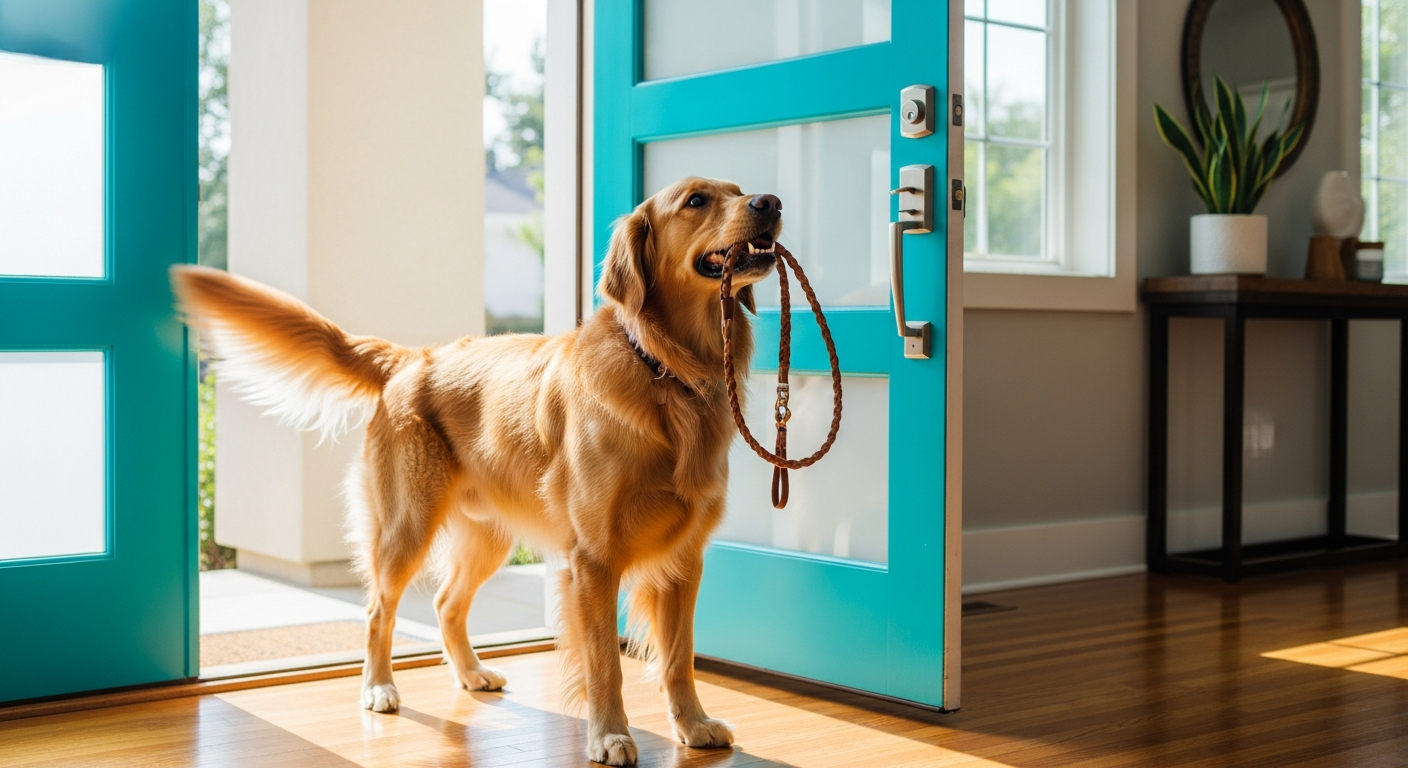
The easiest way to cut a kid's screen time this fall isn't a stricter rule, it's a better option already living in the house: the dog. Swap one daily screen slot, 20 to 30 minutes, for a dog-centered activity matched to your child's age, and you're not fighting the screen. You're out-competing it with something your kid actually wants to do.
Key takeaways
- Tweens (8-12) average about 5 hours 33 minutes of entertainment screen media a day and teens about 8 hours 39 minutes, per Common Sense Media's tween and teen census — the baseline most families are working against.
- The AAP's current digital media guidance skips a one-size-fits-all hour limit and instead asks whether screens are crowding out sleep, activity, and family time — exactly the gap dog time can fill.
- Dog-owning preschoolers logged roughly eight more sessions of unstructured physical activity a week than non-dog households, and regular family dog walking was linked to less screen time, in Australia's PLAYCE cohort study.
- A four-week program of child-led dog sessions kept UK schoolkids' cortisol (a stress hormone) level across a term, while a no-treatment group's cortisol rose significantly over the same period.
- This is about addition, not deprivation. Pick one screen slot a day, match the swap to your child's age, and let the dog carry the rest.
Why is back-to-school the right moment to reset screen habits?
Summer schedules are loose on purpose, no bell schedule, more unstructured downtime, often more screen time to fill it. The first weeks of school reset routines anyway, new bedtime, new after-school block, new rules everyone already expects, which makes it the cheapest possible moment to add a habit rather than fight one.
That framing matters because the goal isn't villainizing screens. The AAP's updated guidance explicitly moved away from strict hour limits toward a "crowding out" test: is screen use displacing sleep, physical activity, or family time that a kid would otherwise get? If the answer is yes for the after-school hour, that's a specific, fixable slot, not a referendum on your family's whole relationship with devices.
How much screen time are kids actually getting?
A lot, and it's worth knowing the baseline before you try to change it. Common Sense Media's tween and teen census found average daily entertainment screen use at 5 hours 33 minutes for 8- to 12-year-olds and 8 hours 39 minutes for 13- to 18-year-olds, both up sharply from pre-pandemic levels (Common Sense Media). That figure doesn't mean kids are staring at a screen with nothing else happening; it includes overlapping use, like scrolling while watching TV. Still, it's a useful anchor: even a 20-minute daily swap is a small fraction of the total, which makes it an achievable ask rather than an overhaul.
What actually happens when you trade screen time for dog time?
Two things researchers can actually measure: more movement, and lower stress. In Australia's PLAYCE cohort study of preschoolers, dog-owning kids got about eight more sessions of unstructured physical activity per week than kids without a dog, and families who walked the dog three or more times a week saw both more outdoor play and less screen time in their child (HABRI-funded PLAYCE research). The effect tracked with actual dog walking and play, not just having a dog in the house.
On the stress side, a randomized study of UK primary schoolers ran a four-week program of twice-weekly, 20-minute dog-interaction sessions and tracked cortisol (a stress hormone) across the school term. Kids in the dog-intervention group showed no significant rise in cortisol, while a no-treatment control group's cortisol rose significantly over the same period (Meints et al., PLOS ONE, 2022). The sessions were deliberately child-led: kids petted, learned about, and interacted with the dog at their own pace rather than just sitting near it. That's a useful design cue for a home swap too, hand your kid the leash or the treat bag and let them drive the interaction, rather than just putting them in the same room as the dog.
What are good screen-to-dog swaps for ages 5-8?
Keep it short, simple, and game-shaped, this age band loses interest fast without a clear "win." Try a 15-minute treat-toss game before dinner instead of a show, where the child tosses a treat and the dog "finds" it. A "walk and report" mission works too: send your child on a short supervised walk with a job, like counting how many houses have a mailbox, so the dog time has a built-in task. Our indoor dog games for kids roundup has more rainy-day options sized for this age.
What are good screen-to-dog swaps for ages 9-12?
Tweens do well with ownership and a bit of novelty, which is also the age where a dog starts becoming a character in family life rather than just a pet. Trick-training in 10-minute blocks (one new trick a week, timed and tracked) replaces a lot of scroll time and gives a kid something to show off. A "dog job chart," where your tween owns feeding or brushing on a schedule, builds the same habit loop apps are designed to exploit, just pointed at the dog instead. Some families lean into the novelty angle with a talking collar like SPEAK ($199 Founder's Edition plus $5/month), which gives the dog a funny, AI-generated voice kids can actually talk to out loud, entertainment and bonding, not a health device or a "translator." For more ideas across the whole family, 50 fun things to do with your dog has options sorted by indoor, outdoor, and group play.
What about teens who are mostly glued to their phones?
Teens are the hardest swap, and the honest move is to make dog time overlap with what they already do rather than compete with it head-on. Let a teen listen to a podcast or music through headphones during a dog walk, so the walk isn't "instead of" their phone, just a different backdrop for it. Handing over full responsibility for one part of the dog's routine, like the evening walk, works better than a vague ask to "spend more time with the dog," because it's a defined job with a start and end time. A five- or ten-minute wind-down with the dog before bed, replacing the last bit of phone scrolling, is a small ask that pediatric sleep guidance already supports as good practice.
How do you make the swap stick without a nightly fight?
Pick one fixed slot, keep the dog's role obvious, and let kids choose within limits. Naming the exact window, "the first 30 minutes home from school is dog time, then screens" removes the daily negotiation, since the rule applies every day rather than being re-litigated. Offer a short menu of two or three activities and let your child pick, rather than assigning the same swap every time; choice is most of what makes it not feel like a punishment. And don't frame it as screens being confiscated. Frame it as the dog getting first dibs, which is a fact kids generally find charming rather than restrictive. For families building this into a real routine rather than a one-off, our complete guide to kids and dogs covers age-appropriate chores and supervision in more depth, and pairing the swap with a recurring ritual, the same walk, the same trick-training night, tends to outlast a rule that only exists to cut screen time. If you're curious how AI-driven pet tech fits into all this without turning into another screen, AI dog collars, explained breaks down what's real and what isn't.
The realistic goal isn't a screen-free household. It's one daily slot where the dog wins by default, which, most nights, turns out to be the easiest rule in the house to keep.