Not-So-Spooky Halloween Games for Dogs and Little Kids
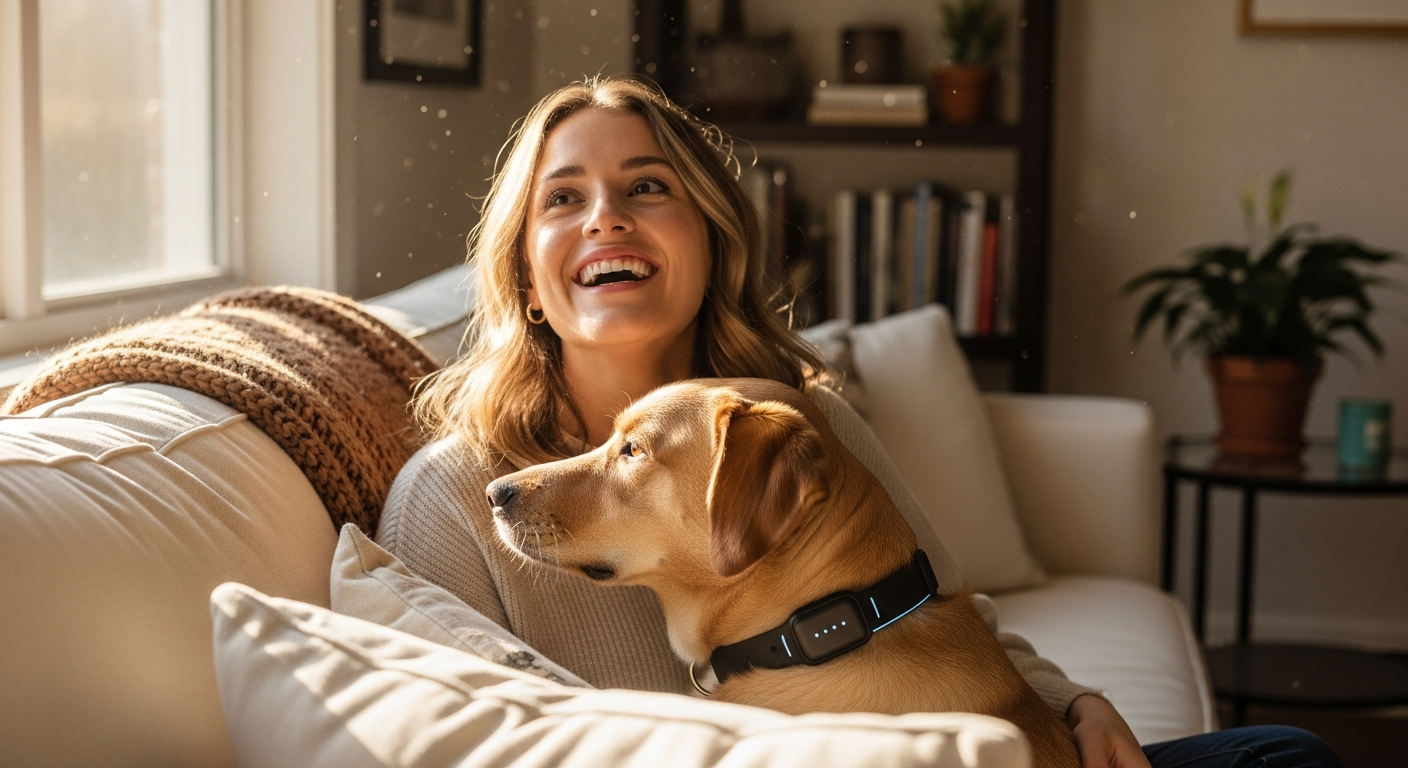
The best not-scary Halloween games for dogs and young kids skip anything loud or startling: a slow costume parade, a "guess the costume" game, a dog-safe treat hunt, and a calm indoor trick-or-treat round where kids "ring" the bell and the dog gets a treat instead of a stranger at the door. All of these work for kids as young as 3 with an adult close by, and none need a real doorbell, real candy, or a dog who tolerates crowds.
Key takeaways
- Costume parades, treat hunts, and a "guess the dog's costume" game are all low-key Halloween fun that don't rely on a real doorbell or trick-or-treat crowd.
- A calm indoor "trick-or-treat" game lets kids practice ringing a pretend bell and rewarding the dog with a treat instead of exposing the dog to a real, repeating doorbell all evening.
- Skip chocolate, xylitol candy, glow sticks, and any costume that blocks the dog's vision, hearing, or movement — real hazards flagged by the AKC and ASPCA.
- Keep games to 10-15 minutes at a time; Halloween evening is already a lot of new sound and smell for a dog to process.
- Watch for stress signs (pulling away, lip licking, a stiff body, hiding) and let the dog opt out of any costume or game, no questions asked.
What are some gentle Halloween games dogs and young kids can play together?
The gentlest Halloween games use a costume, a few dog treats, and no real strangers at the door. A costume parade, a treat scavenger hunt, and a "guess the dog's costume" guessing game all give kids the dress-up-and-cheer fun of Halloween without the noise and chaos of actual trick-or-treating.
Costume parade. Dress the dog (if they're willing) and let kids line up stuffed animals or each other in costume for a slow march around the living room, complete with a kid-made "red carpet" of towels. Best age: 3-5 for the parade itself, with an older sibling (6-9) as the "announcer" calling out each costume.
Guess the dog's costume. Before the dog comes out in their outfit, have kids guess what they'll be — a pumpkin, a hot dog, a bumblebee — then reveal it for a laugh. This works even with no costume at all; a bandana counts. Best age: 3-9, since it's pure imagination and needs no props.
Dog-safe treasure hunt. Hide a few dog-safe treats around one room (not candy) and let kids help the dog "trick-or-treat" for them, sniffing under couch cushions and behind chair legs. This is the same scent-game format used in our indoor dog games for kids guide, just with a Halloween theme. Best age: 3-9, with 10-13 year olds able to design a trickier hunt for younger siblings to run.
How do you play a costume parade game with your dog and kids?
Set up a short "runway" — a hallway or a line of towels — and let each family member, dog included, walk it one at a time to cheers. Keep the dog's costume optional and the walk under two minutes so nobody, dog or toddler, gets overstimulated.
Give kids a job: one holds a paper "trophy," another narrates like a sports announcer, another takes photos. That division of labor keeps younger kids (3-5) from all crowding the dog at once, which is often what turns a fun moment into a stressful one for the dog. If your family already gives the dog a running commentary track, this is a natural moment for it — a talking collar like SPEAK ($199 Founder's Edition, $5/month) can give the dog a funny "in-character" reaction to their own costume reveal, purely for laughs, not because it actually knows what the dog is thinking.
What's a safe indoor "trick-or-treat" game for dogs?
Set up a pretend doorbell station inside the house — a bell on a string, or just a kid saying "ding dong!" — and have kids take turns "trick-or-treating" the dog with a small training treat each time the bell rings. This teaches the dog that a doorbell sound means something good, in a controlled setting, instead of the dog's only doorbell experience being 40 real strangers on the actual night.
Play a few rounds, then stop. Ten rounds is a full game; more than that and both the dog and the kids lose interest. This game doubles as light doorbell desensitization, which matters more than most families expect — plenty of dogs find a repeatedly ringing doorbell more stressful than any costume. Pair it with our full list of things to do with your dog for more low-key games that build good habits without feeling like training.
What if my dog is scared of costumes, doorbells, or trick-or-treaters?
Don't force it. A dog who pulls away from a costume, freezes, tucks their tail, or keeps licking their lips is telling you they're not into it, and pushing through usually makes the next attempt harder, not easier. Skip the costume, or try just a bandana instead of a full outfit.
For doorbell and stranger stress, give your dog a cozy setup away from the front door: a back bedroom with a favorite chew, a baby gate across the hallway, or a crate with the door open if they already love it. Let kids watch the trick-or-treaters arrive from a window instead of the porch, so the dog isn't part of the greeting line. The AKC recommends introducing any costume at least two weeks ahead of time and never leaving a costumed dog unsupervised, which gives nervous dogs plenty of runway to decide the whole thing is no big deal.
What Halloween mistakes should families avoid with the dog?
The short list: no chocolate or xylitol candy, no glow sticks, no tight or restrictive costumes, and no leaving a costumed or candy-adjacent dog unsupervised. These are the hazards vets see spike every October, and every one of them is easy to avoid once you know to look for it.
- Chocolate and sugar-free candy. Both are genuinely dangerous to dogs — chocolate contains theobromine, and xylitol (common in sugar-free gum and candy) can cause a dangerous blood sugar crash, according to the AVMA. Keep the bowl on a high shelf, not the coffee table.
- Wrappers. Foil and cellophane can lodge in a dog's throat or gut if swallowed whole, so a fast sweep of the floor after trick-or-treaters leave is worth it.
- Glow sticks and glow jewelry. The liquid inside tastes awful and can cause drooling and panic if a dog bites into one, per the ASPCA — keep them off the floor and away from a curious nose.
- Tight or restrictive costumes. A safe costume never blocks a dog's sight, hearing, breathing, or ability to walk normally, and should have no small pieces a dog could chew off and swallow.
- Open flames. Keep jack-o-lantern candles and any decor with a real flame well out of tail-wagging range.
Safety note: with young kids, dog treats, and a dressed-up dog all in the same room, keep an adult within arm's reach for kids under 6 — most bites involving children happen with a familiar family dog, not a strange one, so supervision matters even during the fun stuff.
How long should Halloween games with kids and the dog last?
Ten to fifteen minutes per game is the sweet spot, with a break before starting a new one. Halloween evening already brings extra noise, unfamiliar smells, and a steady stream of costumed visitors, so a dog's tolerance for "more fun" runs out faster than usual, even for a dog who normally loves a long play session.
Watch the dog's body language rather than the clock. A relaxed, loose-wagging dog who keeps coming back for more can keep playing; a dog who wanders off, yawns repeatedly, or heads for their bed has had enough for now, and that's a good stopping point, not a problem to fix.
One low-key Halloween for the whole family
None of these games need real candy, a real doorbell, or a dog who's comfortable with a crowd — that's the point. A slow costume parade, a treat hunt, and a practice round of "trick-or-treat" cover the fun of the night without any of the parts that actually stress dogs out. For more ways to build these into a yearly habit, see our complete guide to kids and dogs and 25 summer activities for kids and dogs for the rest of the year's game ideas.